

What Are SEPA Transfers: Fees, Timing & How They Actually Work
By
Emma Carter

30.03.2026
14 min
If you live in Europe, freelance for European clients, or simply need to send euros across borders, you've already bumped into the term "SEPA." And chances are, nobody has properly explained what are sepa transfers — without drowning you in financial jargon.
Here's the short version: SEPA is the system that lets you move euros between 41 countries as easily as sending money to your neighbour. But there's much more to it. In this guide, we'll cover how SEPA payments actually work, break down the real costs and timing, explain SEPA Credit vs SEPA Instant, cover transfer limits, and show you where SEPA ends and SWIFT begins. Whether you're an expat, a freelancer juggling invoices, or a digital nomad trying not to lose money on fees — this one's for you.
What Does SEPA Stand For?
SEPA stands for the Single Euro Payments Area — a network of
41 countries that agreed to treat euro payments the same way, whether you're sending money across the street or across borders.
Before SEPA, sending €500 from Lisbon to Berlin meant navigating intermediary institutions, unpredictable fees, and 3–5 days of waiting. Every country had its own rules. It was a mess.
SEPA
launched in 2008 with credit transfers and is governed by the European Payments Council.
It started with the original EU members plus a handful of others, and has since expanded to cover all 27 EU states, the UK, Switzerland, Norway, Iceland, Liechtenstein, plus microstates and — as of 2025 — five EU candidate countries including Albania, Montenegro, and Serbia, bringing the total to 41. Worth noting: the UK remains part of the SEPA zone, but not all UK-based providers still support SEPA transfers. Some have dropped SEPA connectivity since Brexit, so if you're sending to or from a UK account, it's worth confirming with the provider first.
If you have what is a sepa bank account — any account with a European IBAN in a SEPA-member country — you can send and receive euros using the same rules, regardless of which country you're in. No special accounts, no extra paperwork.

How Do SEPA Payments Work (And Why Should You Care)
The mechanics behind SEPA are surprisingly straightforward. Here's what happens when you make a transfer:
Step 1. You log into your payment app or online account and select a euro transfer.
Step 2. You enter two pieces of information: the recipient's full name and their IBAN (International Bank Account Number). That's it. No SWIFT codes, no intermediary details.
Step 3. Your provider sends the payment instruction through the SEPA Credit Transfer (SCT) scheme — a standardised messaging system that all SEPA participants speak fluently.
Step 4. The recipient's payment provider processes the incoming payment and credits their account.
What makes this remarkable is what's missing from the process. There are no intermediary institutions taking a cut. No currency conversion (it's euro-to-euro only). No guessing about when the money arrives.
To put it in perspective: one freelancer based in France
described her experience receiving payments from EU clients via SEPA — same-day arrivals, sometimes within seconds, with zero fees. She now includes her IBAN on every invoice and considers SEPA her default over PayPal or wire transfers. That's the kind of simplicity the system was designed for.
The key thing to understand: how do sepa payments work is really a question of standardisation. Every payment provider in the SEPA zone processes these payments using the exact same rulebook. That predictability is the whole point.
SEPA Credit Transfer vs SEPA Instant: Pick Your Speed
Not all SEPA transfers are created equal. There are actually two main flavours, and understanding the difference can save you real headaches.
SEPA Credit Transfer (SCT) is the standard option. Your provider queues the payment, and it gets processed during normal working hours. Reliable, low-cost, and perfectly fine for most situations — like paying rent, settling invoices, or transferring savings between your own accounts.
SEPA Instant Credit Transfer (SCT Inst) is the fast lane.
Introduced in November 2017, this scheme processes transfers in seconds, 24 hours a day, 365 days a year. Weekends, holidays, 3 AM on a Tuesday — doesn't matter. The original target was under 10 seconds; as of the
October 2025 rulebook update, the target execution time has been reduced to just 5 seconds.
Here's what we've observed from our 2024 user data: roughly 40% of our clients' transfers are time-sensitive enough that Instant makes a meaningful difference. If you're paying for a last-minute booking, settling a freelance invoice before a deadline, or sending money to a family member who needs it now — those few hours matter.
The catch? Not every provider supports SEPA Instant yet, although adoption has grown significantly since the EU's
Instant Payments Regulation (Regulation 2024/886, adopted March 2024) started pushing providers to offer it as standard. Eurozone credit institutions were required to support receiving instant transfers from January 2025, and sending them from October 2025. Both the sending and receiving institution need to support the scheme for it to work.
SEPA Transfer Fees: The Real Cost Breakdown
Here's SEPA's best feature: under
EU regulation, providers cannot charge more for a cross-border SEPA transfer than for a domestic one. If your provider charges €0 locally, they must charge €0 to any SEPA country.
In practice, sepa transfer fees look like this:
- Digital providers and fintechs (including Blackcat): typically several free transfers per month, with small fees (€0.20–€1.00) for additional ones.
- Traditional banks: usually free for standard accounts, though some older account types carry €1–3 per outgoing transfer.
- SEPA Instant surcharges: some providers add €0.50–€1.50 on top, though the Instant Payments Regulation is pushing to eliminate this — it now requires that instant transfer charges cannot exceed those for standard transfers.
How Long Do SEPA Payments Take
Standard SEPA Credit Transfer: up to 3 working days from the moment your provider sends the instruction, though in practice most arrive within 1 working day. The
EPC scheme rules set a maximum of 1 working day for the interbank leg, but the full end-to-end journey — including your provider's own processing — can take longer. Key word: working days. Friday evening = Monday or later.
SEPA Instant: seconds, any time, any day. The 2025 rulebook targets 5-second execution with a hard limit of 10 seconds.
The question how long do sepa payments take depends on when you send and which scheme you use. Here are the patterns from our data:
- Monday–Thursday, before 2 PM: typically arrives within 1 working day, often same-day.
- Friday afternoon or weekends (standard SEPA): expect arrival on Monday or the next working day, though in some cases it may take up to 3 working days.
- SEPA Instant, any time: seconds.
SEPA Transfer Limits: What You Can Actually Send
At the scheme level: Standard SEPA Credit Transfers have no maximum amount limit — you can send €100 or €10 million under the same rules.
SEPA Instant used to be capped at €100,000 per transaction. That changed with the
2025 EPC Rulebook update: the scheme-level cap has been removed entirely. The new theoretical maximum is €999,999,999.99. However — and this is important — the Instant Payments Regulation requires that providers' own caps for instant transfers cannot be lower than their caps for standard SEPA transfers.
At the provider level: This is where sepa transfer limits actually bite. Your provider sets its own daily and per-transaction limits, and these vary widely.
Our advice: check your provider's limits before you need a large transfer. Nothing's worse than discovering your €20,000 apartment deposit can't go through because your provider caps outgoing transfers at €15,000. Most providers allow temporary limit increases with 24–48 hours' notice and additional verification.
Payment Reference: The Detail Most People Forget
When you make a SEPA transfer, there's an optional field for a payment reference — up to 140 characters. Most people skip it. Don't.
If you're a freelancer, include your invoice number. Paying rent? Add your tenant ID. Business payment? Reference the contract number. This tiny habit prevents the most common SEPA headache: payments stuck in a holding queue because the receiving institution can't automatically match them to the right account. We've seen clients waste days chasing "lost" payments that were simply unmatched.
This isn't just our experience. Bitpanda, one of Europe's major crypto platforms,
states in their help centre that SEPA deposits made without a payment reference (or with an incorrect one) are automatically refunded — and the process takes up to 7 working days. That's a week of your money in limbo, for something that takes 10 seconds to fill in.
SEPA vs SWIFT: A Side-by-Side Comparison
This is probably the most common question we hear: "Should I use SEPA or SWIFT?" The answer depends entirely on where you're sending money and in what currency.
SEPA is a regional system. It handles euro payments within the SEPA zone (41 countries). It's fast, cheap, and standardised.
SWIFT is a global messaging network that connects
over 11,000 financial institutions in 200+ countries. It handles any currency, anywhere. But that global reach comes with trade-offs: higher fees, slower processing, and less predictable timing.
| Feature | SEPA | SWIFT |
|---|---|---|
| Currency | Euro (EUR) only | Any currency |
| Region | SEPA zone (41 countries) | Worldwide (200+ countries) |
| Speed | Up to 3 working days standard / seconds for Instant | 1–5 working days typically |
| Cost | Low-cost or free | Higher fees (often €15–50+) |
| What you need | Recipient's IBAN | IBAN + SWIFT/BIC code |
| Use case | Euro transfers within Europe | Non-EUR or non-SEPA transfers |
The practical rule: if you're sending euros to a SEPA country, always use SEPA. You'll pay more, wait longer, and deal with more uncertainty through SWIFT.
This matters more than people think. In one
documented case, a UK-based user discovered they'd been sending all their European euro payments via SWIFT for months — their provider's interface didn't make the SEPA option obvious. By the time they realised, they'd paid hundreds of euros in unnecessary fees on transfers that could have been free.
SWIFT becomes necessary when you need to send non-euro currencies or when the recipient is outside the SEPA zone. For global transfers, consider providers that specialise in multi-currency options — or use a
crypto transfer as an alternative rail for moving value without the SWIFT overhead.
How Blackcat Makes SEPA Work Harder for You
We built Blackcat for people who use SEPA regularly — expats, freelancers, digital nomads, crypto users, and anyone who moves euros across borders as part of daily life.
- 5 free SEPA transfers per month, no amount limits. Covers salary, rent, bills, and personal transfers without spending a cent on fees.
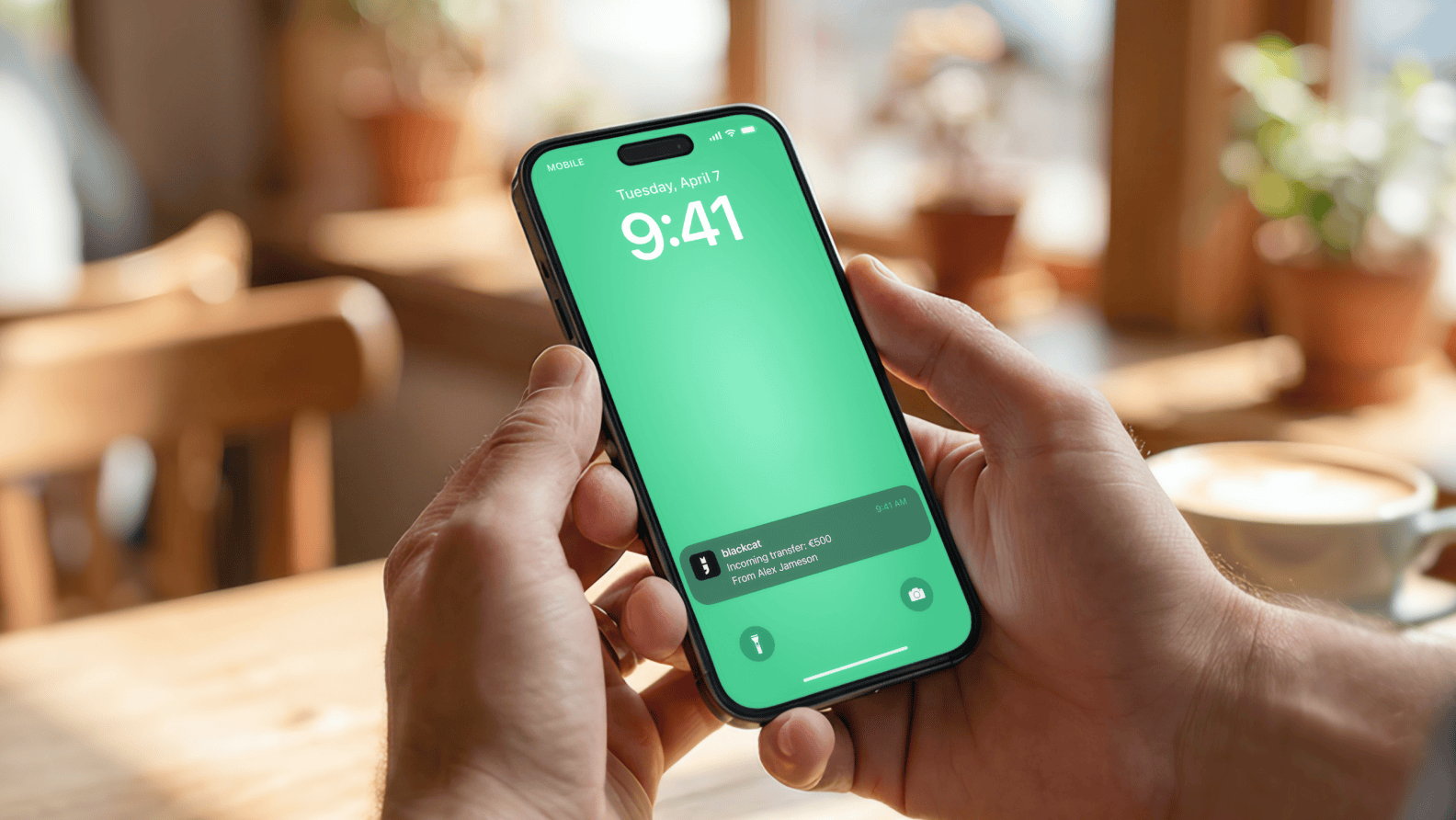
- A European IBAN that works everywhere. Your Blackcat account comes with a full EUR IBAN — receive salary, client payments, or sepa money transfer from any SEPA provider, exactly like a traditional account.
- Crypto and fiat in one place. Your EUR IBAN links directly to your crypto wallet inside the Blackcat app. Convert crypto to euros and send via SEPA — one flow, one app.
- Up to 4% annual bonus on your EUR balance. No lock-up period, no minimum amount. Passive income on money you'd keep in an account anyway.
FAQ
Can I send a SEPA transfer in a currency other than euros?
No. SEPA is exclusively for euro (EUR) payments. If you need to send GBP, USD, or any other currency, you'll need to use SWIFT or a multi-currency transfer service.
Is a SEPA transfer the same as a wire transfer?
SEPA is a type of electronic transfer — specifically, a standardised euro transfer within the SEPA zone. All SEPA transfers are electronic fund transfers, but not all electronic transfers are SEPA.
Do I need a special account to send or receive SEPA payments?
No. Any standard account with an IBAN in a SEPA-member country can send and receive SEPA payments. This includes accounts at traditional banks, digital providers, and licensed fintech services like Blackcat.
What happens if I enter the wrong IBAN?
If the IBAN format is invalid, your provider will reject the transfer immediately. If the IBAN is valid but belongs to someone else, the money goes to that person. Recovery requires your provider to contact the receiving institution and request a return — possible but not guaranteed. In a widely discussed
MoneySavingExpert forum case, a user sent £2,000 with one digit missing from the IBAN. Despite the invalid format, the payment was processed and recovery took weeks of back-and-forth between institutions. Always double-check before confirming.
Are SEPA transfers safe?
Yes. SEPA transfers are processed through regulated financial infrastructure with multiple layers of security and fraud detection. They're as safe as any domestic electronic transfer.
Can I cancel a SEPA transfer after sending it?
With standard SEPA, you may be able to cancel if the payment hasn't been processed yet — contact your provider immediately. With SEPA Instant, cancellation is effectively impossible since the funds arrive within seconds.
Share this article