Table of Content
Table of Content
What Is a Payment Card?Types of Payment Cards: A Complete ClassificationBy Physical FormatBy Card NetworkBy BIN Type: The Debit/Credit Distinction That Terminals SeeWho Issues Payment Cards in Europe?Deposit Guarantee vs Safeguarding: What's the Difference?What Accounts Are Payment Cards Linked To?Payment Cards for Children and Teenagers in EuropePayment Card vs Credit Card: The Full ComparisonIs a Payment Card a Credit Card?Can Payment Cards Be Used Online?Can Payment Cards Be Used Abroad?What to Check Before Choosing a Payment CardSummary
Table of Content
What Is a Payment Card and How Is It Different from a Credit Card?
A payment card is probably the most-used financial tool you own — and the one you've thought about the least. You tap it at the checkout, type its number into online forms, and occasionally panic when you can't find it. But what actually is a payment card? How many types exist? Who issues them? And where does a credit card fit in?
A payment card is probably the most-used financial tool you own — and the one you've thought about the least. You tap it at the checkout, type its number into online forms, and occasionally panic when you can't find it. But what actually is a payment card? How many types exist? Who issues them? And where does a credit card fit in?
According to the ECB's H1 2025 payments statistics, there are now 879.3 million payment cards in circulation across the euro area — an average of 2.5 per person. Card payments account for 57% of all non-cash transactions. And yet, many cardholders can't confidently explain the difference between a debit card, a credit card, and a prepaid card — let alone what a "credit-grade BIN" means or how an e-money account differs from a bank account.
This article is the complete guide. We'll define what a payment card is, classify every major type in Europe, explain who issues them and under what licences, cover payment cards for children and teenagers, and do a thorough breakdown of payment card vs credit card — so you can understand exactly what's in your wallet.
What Is a Payment Card?
A payment card is any card — physical or virtual — that allows you to make payments to merchants, withdraw cash, or transfer funds. It's the umbrella term. Every debit card is a payment card. Every credit card is a payment card. Every prepaid card is a payment card. If it has a card number, an expiry date, a security code, and connects to a payment network (Mastercard, Visa), it's a payment card.
The payment card meaning is intentionally broad because the technology behind all these cards is identical: a chip (or a set of digital credentials for virtual cards), an antenna for NFC contactless transactions, and a connection to a card network that routes the transaction between the merchant and your card issuer.
What makes different types of payment cards different isn't the card itself — it's how the payment is funded when you tap, insert, or type your card number.
Types of Payment Cards: A Complete Classification
By Funding Mechanism (the Most Important Distinction)
This is the classification that actually matters for how your money works. Every payment card falls into one of four categories based on where the money comes from when you make a purchase:
horizontal scroll
| Card Type | How It's Funded | Do You Borrow Money? | Example |
|---|---|---|---|
| Debit card | Draws directly from your current/bank account in real time | No — you spend what you have | Most bank-issued cards in Europe |
| Credit card | The issuer (usually a bank) lends you money; you repay later | Yes — it's a loan per transaction | Visa / Mastercard credit cards |
| Prepaid card | You load money onto the card in advance; it spends from that preloaded balance | No — you spend what you loaded | Gift cards, travel money cards, some fintech cards |
| Charge card | Similar to credit — you spend the issuer's money — but you must pay the full balance each month (no revolving credit) | Technically yes, but no interest if paid on time | American Express Green/Gold (classic model) |
Debit cards are the most common type across Europe. According to Solaris Group's 2025 analysis, debit cards are the most popular cashless payment method in Europe outside the UK, Ireland, Turkey, and Greece. The reason is simple: you can only spend what's in your account, which makes overspending difficult.
Credit cards are more popular in the UK, US, and parts of southern Europe. They give you a credit line — a maximum amount you can borrow each month. You receive a monthly statement and must repay at least a minimum amount. If you don't pay the full balance, the bank charges interest, which in Europe typically ranges from 15% to 25% APR.
Prepaid cards are growing rapidly. Mordor Intelligence estimates the European prepaid card market at $374.49 billion in 2026, projected to reach $599.48 billion by 2031 at a 9.87% CAGR. Multi-purpose open-loop cards (those that work on the Visa or Mastercard network, accepted everywhere) led with 75.35% market share in 2025.
Charge cards are less common in everyday use but worth understanding. The key difference from credit cards: there's no option to carry a balance. You must pay everything off each month. This means no interest — but also no flexibility to spread payments.
By Physical Format
horizontal scroll
| Format | What It Is | Best For |
|---|---|---|
| Plastic (physical) card | A tangible card with a chip, NFC antenna, magnetic stripe, and printed details | ATMs, chip-and-PIN terminals, hotels/car rentals, offline backup |
| Virtual card | A digital-only card (number, expiry, CVV) visible in your app | Online shopping, subscriptions, Apple Pay / Google Pay contactless, multi-wallet budgeting |
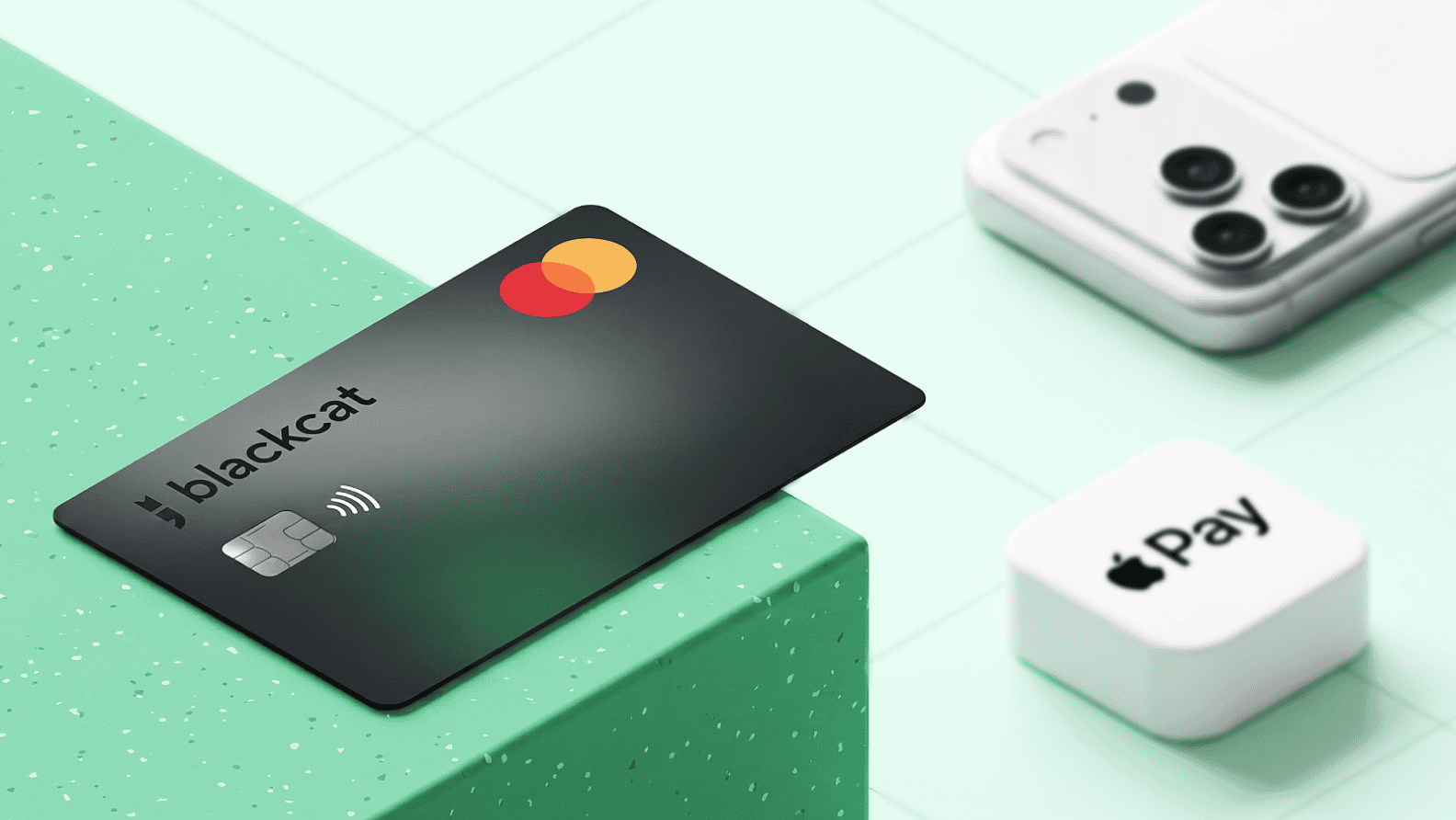
Most providers today issue both. With Blackcat, you get a virtual card instantly when you open an account, and can order a free plastic card with free standard worldwide delivery. Both formats connect to the same account and work with the same payment card app.
By Card Network
The card network is the infrastructure that routes your payment from the merchant to your card issuer and back. In Europe, two networks dominate:
horizontal scroll
| Network | European Presence | Notes |
|---|---|---|
| Mastercard | Dominant across most of the EU | Used by most fintechs and many banks |
| Visa | Strong, especially in the UK and Nordics | Competing closely with Mastercard |
| American Express (Amex) | Limited | Lower merchant acceptance, higher interchange fees |
| UnionPay | Niche | Primarily Chinese cardholders travelling in Europe |
| National schemes | Country-specific | Cartes Bancaires (France), girocard (Germany), Bancomat (Italy), Multibanco (Portugal) |
According to the ECB's 2025 report on card schemes and processors, national card schemes persist in several European countries, with some providing debit cards only (Belgium, Denmark, Germany, Malta), some debit and prepaid (Italy, Portugal), and some all types (Bulgaria, France). However, the majority of cross-border and online transactions in Europe run on Mastercard or Visa.
Blackcat issues a payment card on the Mastercard network, accepted at millions of merchants worldwide and compatible with Apple Pay and Google Pay.
By BIN Type: The Debit/Credit Distinction That Terminals See
This is a technical detail that has very practical consequences.
Every payment card has a BIN (Bank Identification Number) — the first six to eight digits of the card number. The BIN tells the merchant's terminal two things: who issued the card, and whether the card is registered as "debit" or "credit" in the network's system.
Why does this matter? Because certain merchants — especially car rental companies and hotels — treat debit and credit BINs differently. When you check in, the merchant places a pre-authorisation hold (€200–€500 is typical). Many terminals are configured to only accept holds on cards with a credit BIN. If your card has a debit BIN, you might be declined at the desk — even if you have plenty of money.
A credit-grade card has a credit BIN but no actual credit products. No borrowing. No overdraft. No interest. The BIN simply tells the terminal "this card is accepted in credit-card contexts." It's a practical solution for people who want hotel and car rental acceptance without the risks or requirements of a traditional credit card.
The Blackcat payment card has a credit-grade BIN. It carries no credit products or overdraft, but it's accepted where credit cards are required — including pre-authorisation holds at hotels, car rental agencies, and similar merchants.
Who Issues Payment Cards in Europe?
Payment cards in Europe are issued by different types of financial institutions, each operating under a specific regulatory licence. The type of institution doesn't determine the type of card — a bank and an EMI can both issue a Mastercard-branded payment card that looks and works identically at the terminal. What differs is the underlying account structure, the regulatory framework, and how your money is protected.
horizontal scroll
| Institution Type | Licence / Regulation | What They Can Issue | How Funds Are Protected | Examples |
|---|---|---|---|---|
| Banks | Banking licence (national central bank / ECB) | Debit cards, credit cards, charge cards | Deposit Guarantee Scheme (DGS) — up to €100,000 per depositor per bank | Deutsche Bank, BNP Paribas, ING, Santander |
| Electronic Money Institutions (EMIs) | EMI licence (e.g., MFSA in Malta, BaFin in Germany, Bank of Lithuania) | Payment cards linked to e-money accounts | Safeguarding — client funds held in segregated accounts at a credit institution, separate from the issuer's own funds - and/or insurance | Papaya Ltd (issues Blackcat), Wise, SumUp |
| Payment Institutions (PIs) | Payment institution licence under PSD2 | More limited; can facilitate payments but usually don't hold funds or issue cards with stored value | Varies by scope of licence | Some payment processors |
| Fintechs (via partnerships) | Operate under a partner's licence (bank or EMI) | Whatever the partner's licence permits | Depends on the underlying partner | Many consumer fintech apps |
The important nuance: the card in your wallet doesn't reveal which type of institution issued it. A Mastercard issued by Deutsche Bank and a Mastercard issued by Papaya Ltd (an EMI) both work identically at every terminal, online shop, and ATM worldwide. The difference is in the account behind the card and the regulatory framework protecting your money.
With Blackcat, your payment card is issued by Papaya Ltd., an EMI licensed by the Malta Financial Services Authority (MFSA) since 2012 (registration C55146). Your funds are safeguarded per applicable EU legislation — held in segregated accounts at a European credit institution, separate from Papaya's own funds.
Deposit Guarantee vs Safeguarding: What's the Difference?
This is one of the most common questions when comparing bank accounts and e-money accounts.
horizontal scroll
| Protection Type | Applies To | How It Works | Coverage |
|---|---|---|---|
| Deposit Guarantee Scheme (DGS) | Bank accounts | If the bank goes bankrupt, the national DGS reimburses depositors | Up to €100,000 per depositor per bank |
| Safeguarding | E-money accounts (EMIs) | Client funds must be held in a segregated account at a separate credit institution, ring-fenced from the EMI's own assets. If the EMI fails, client funds are not part of the insolvency estate | Full balance is safeguarded (no cap), but the mechanism is different from DGS |
Both systems aim to protect your money, but through different mechanisms. DGS is insurance-based (a fund pays out). Safeguarding is structural (your money is held separately and can't be touched by creditors). Neither is inherently "better" — they're different tools designed for different institutional structures.
What Accounts Are Payment Cards Linked To?
horizontal scroll
| Account Type | Issued By | Card Type Typically Linked | Key Feature |
|---|---|---|---|
| Current account (checking account) | Bank | Debit card | Full banking services, DGS protection |
| Credit facility | Bank | Credit card | Revolving credit line, interest on unpaid balances |
| E-money account | EMI | Payment card | Safeguarded funds, often with IBAN, SEPA transfers |
| Prepaid balance | Various (can be bank, EMI, or non-financial company for closed-loop) | Prepaid card | Pre-loaded, no account relationship required for some types |
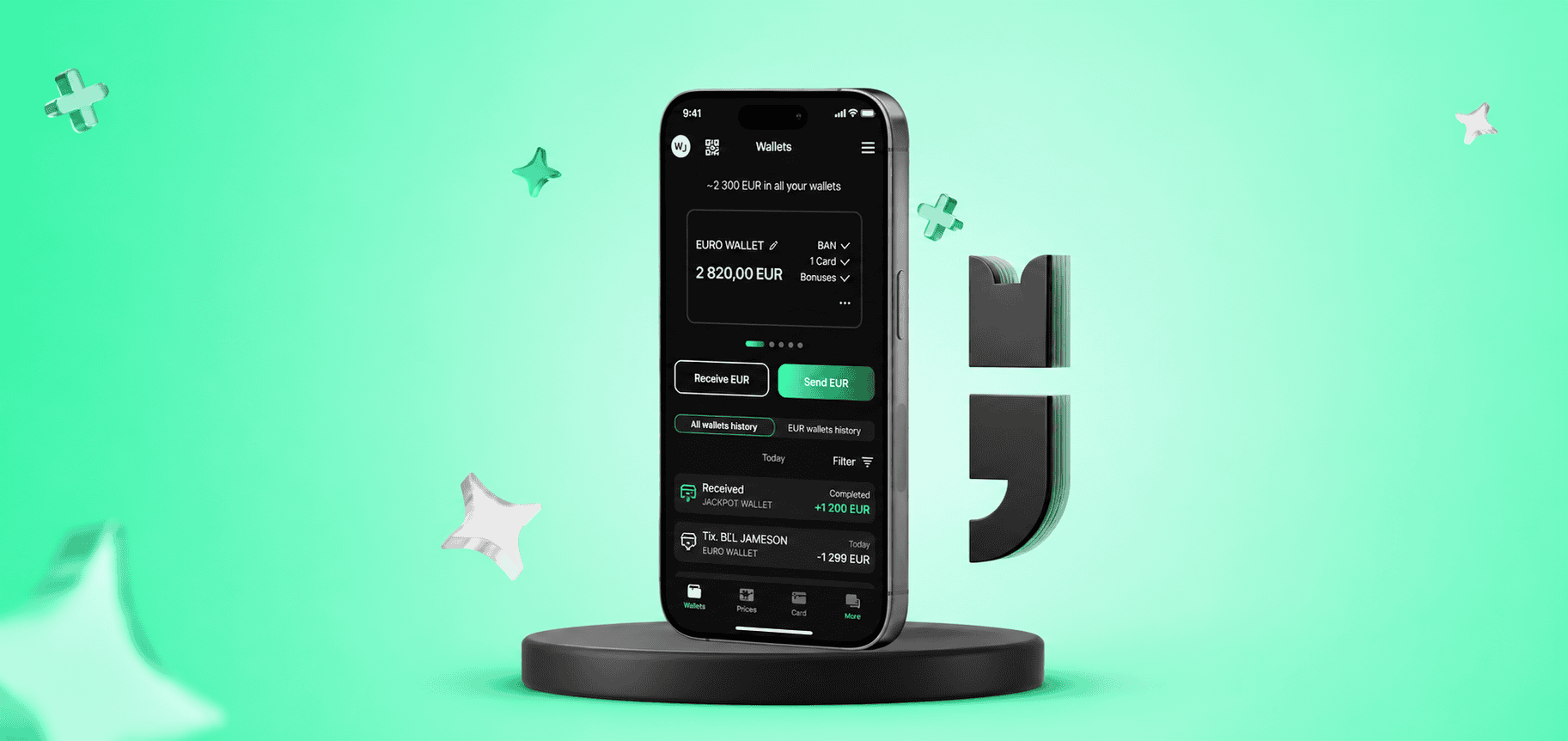
Blackcat provides an IBAN account — a personal European IBAN (Malta, MT prefix) linked to your payment card. You can receive SEPA transfers, set up direct debits, and manage multiple wallets with card within a single account — each wallet with its own optional virtual card and independent balance.
Payment Cards for Children and Teenagers in Europe
This is a rapidly growing segment. As cash use declines — the ECB SPACE 2024 study shows cash dropped from 59% to 52% of POS transactions in the euro area between 2022 and 2024 — payment cards for younger users have become a practical necessity, not just a nice-to-have.
General rules across Europe:
- Under 16: payment cards are always sub-accounts of a parent's account, with parental controls, spending limits, and monitoring
- 16–17: many providers (Revolut, N26, and others) allow teens to open their own basic payment accounts with some restrictions
- 18+: full account access, including credit cards and crypto services
- Credit cards: universally 18+ across Europe (require a credit check and legal capacity to enter a credit agreement)
- Crypto services: typically 18+ (Blackcat's integrated crypto service requires users to be 18+)
Blackcat accounts are available from age 16 for the payment card and IBAN account. The integrated crypto service is available from 18+.
Payment Card vs Credit Card: The Full Comparison
This is the comparison most people are actually looking for when they search "payment card vs credit card." Here's every meaningful dimension, side by side:
horizontal scroll
| Dimension | Payment Card (Debit / Prepaid / E-Money) | Credit Card |
|---|---|---|
| Who provides the money? | You — from your own funds on deposit | The bank — as a short-term loan |
| Can you spend more than your balance? | No (transaction declined if insufficient funds) | Yes, up to your credit limit |
| Interest charges | None | Yes — typically 15–25% APR if you carry a balance |
| Credit check required? | No (standard KYC/identity verification only) | Yes — income, debts, credit history assessed |
| Risk of debt | None | Yes — revolving debt can accumulate |
| Monthly fees | Free to low (€0/month with many fintechs) | Often annual fee (€50–€200+ for premium cards) |
| Overdraft possible? | No (unless specifically enabled on a bank debit card) | Built into the product |
| Who can get one? | Most adults; teens from age 6–16 with parental accounts | Adults 18+ with sufficient creditworthiness |
| Spending visibility | Real-time (push notifications per transaction) | Monthly statement (some providers also offer real-time) |
| Accepted at hotels / car rentals? | Yes, if credit-grade BIN; may be declined if debit BIN | Yes |
| Contactless payments | Yes | Yes |
| Online payments | Yes | Yes |
| ATM withdrawals | Yes (from your own balance) | Yes (but usually treated as a cash advance with fees + interest from day one) |
| Cashback / rewards | Depends on provider. Blackcat: 0.5% cashback on card purchases, 4% p.a. reward on balance | Common, but often requires annual fee or minimum spend |
| Fund protection | DGS (bank) or safeguarding (EMI) | DGS (bank-issued credit cards) |
| Good for building credit history? | No (no borrowing = no credit history generated) | Yes — responsible use improves credit score |
| Travel insurance included? | Rarely on free cards | Often on premium credit cards |
Is a Payment Card a Credit Card?
No. A credit card is a specific type of payment card — one that involves borrowing. But a payment card can also be a debit card, a prepaid card, or a card linked to an e-money account, none of which involve borrowing. Saying "payment card" is like saying "vehicle" — it includes cars, trucks, and buses, but they're not all the same thing.
Can Payment Cards Be Used Online?
Yes — both virtual and plastic payment cards work for online payments. You enter your card number, expiry date, and security code (CVV/CVC) at checkout, and the transaction is processed through the card network exactly as it would be in a physical shop.
Virtual payment cards are particularly well-suited for online purchases because they're available instantly (no waiting for delivery), can be dedicated to specific merchants or subscriptions, and can be linked to isolated wallets with limited balances — reducing exposure if a merchant is compromised.
Can Payment Cards Be Used Abroad?
Yes. Any payment card on the Mastercard or Visa network works at any terminal worldwide that accepts that network. This applies across all of Europe and internationally. The card network is standardised — your payment card doesn't need to be "activated for travel" or "enabled for international use" (though some providers may have security settings you can configure).
With Blackcat, your card works at any Mastercard-accepting terminal globally. Your IBAN account supports SEPA transfers across the EEA, UK, and Switzerland, and you can manage your spending across currencies using the multi-wallet system. If you also use the integrated crypto service, you can hold both fiat and integrated crypto service in the same app.
What to Check Before Choosing a Payment Card
Before you commit to a card for everyday payments, run through this checklist:
horizontal scroll
| Check | What to Look For | Why It Matters |
|---|---|---|
| Card type | Debit, credit, prepaid, or e-money? | Determines whether you're spending your own money or borrowing |
| Monthly / annual fees | Free? €5/month? €50/year? | Fees eat into any rewards or benefits |
| Card network | Mastercard or Visa? | Affects acceptance, especially at smaller merchants or abroad |
| BIN type | Debit BIN or credit-grade BIN? | Credit-grade = accepted at hotels, car rentals. Debit BIN = may be declined |
| Virtual + plastic? | Does the provider offer both? | Virtual for online/mobile wallet; plastic for ATMs and backup |
| IBAN included? | Full IBAN with SEPA support? | Essential for salary, bills, and transfers in Europe |
| Multi-wallet support | Can you create separate wallets with separate cards? | Powerful for budgeting and expense separation |
| Rewards / cashback | What rate? What qualifies? Paid in euros or points? | See our Card Cashback Explained for details |
| Fund protection | DGS or safeguarding? | Know how your money is protected |
| App quality | Real-time notifications? Instant freeze? Easy navigation? | Your daily interaction with the product |
| Age requirements | Available from 16? 18? | Relevant for younger users |
Blackcat checks the boxes that matter most for everyday use in Europe: Mastercard payment card with a credit-grade BIN, €0/month subscription, free virtual + plastic card, European IBAN account with SEPA transfers, multi-wallet system with independent cards per wallet, access to cashback and 4% p.a. reward, safeguarded funds, and a clean payment card app with real-time notifications and instant freeze.
Summary
A payment card is any card used to make payments — the broad category that includes debit cards, credit cards, prepaid cards, and charge cards. What distinguishes them is how the payment is funded: your own money (debit/prepaid), borrowed money (credit), or a "pay in full" arrangement (charge). In Europe, debit and prepaid cards dominate everyday spending, credit cards are used more selectively, and cards from EMIs (linked to e-money accounts with safeguarded funds) have become a major part of the landscape.
The payment card vs credit card question comes down to: do you want to spend your own money, with no risk of debt and no credit check required? Or do you want access to borrowing, with the trade-off of interest charges and creditworthiness requirements? For daily spending, a payment card with a credit-grade BIN gives you the best of both worlds: universal acceptance (including hotels and car rentals) without the costs or risks of actual credit.
FAQ: Payment Cards Explained
What is a payment card?
A payment card is any card — physical or virtual — used to make payments to merchants, withdraw cash, or transfer funds. It's the umbrella term that includes debit cards, credit cards, prepaid cards, and charge cards. All payment cards connect to a card network (typically Mastercard or Visa) and carry a card number, expiry date, and security code.
How does a payment card work?
When you tap, insert, or enter your card details online, the merchant's terminal sends an authorisation request through the card network to your card issuer. The issuer checks whether the transaction can be approved (sufficient funds for debit/prepaid, or available credit for credit cards) and sends back an approval or decline. The whole process takes under a second for contactless payments.
Is a payment card the same as a credit card?
No. A credit card is one specific type of payment card — the type that involves borrowing money from the issuer. But most payment cards in Europe are debit or prepaid cards, which spend your own money without any borrowing. Saying "payment card" is like saying "vehicle" — credit cards are one kind, but they're far from the only kind.
What is the difference between a payment card and a credit card?
The key difference is funding. A credit card lets you spend the bank's money now and repay later (with interest if not paid in full). A non-credit payment card (debit, prepaid, e-money) lets you spend only money you already have. This means no interest charges, no credit check to obtain one, and no risk of accumulating debt — but also no ability to borrow.
Can I use a payment card for online purchases?
Yes. Both virtual and plastic payment cards work for online purchases. You enter your card number, expiry date, and security code at checkout. Virtual cards are especially well-suited for online shopping because they're issued instantly and can be dedicated to specific merchants or linked to isolated wallets with limited balances for added security.
Can payment cards be used for travel?
Yes. Any payment card on the Mastercard or Visa network works at terminals worldwide. For travel specifically, check whether your card has a credit-grade BIN (important for hotel and car rental pre-authorisations) and whether your provider charges foreign exchange fees. Adding your card to Apple Pay or Google Pay is also recommended, as mobile wallets often allow higher contactless limits than physical cards.
What is the difference between a virtual card and a plastic card?
A virtual card exists only digitally — visible in your payment app as a card number, expiry, and security code. A plastic card is the physical version you carry in your wallet. Virtual cards are issued instantly and excel at online payments and mobile wallet use. Plastic cards are needed for ATMs, chip-and-PIN terminals, and merchants requiring a physical card. Most providers offer both.
What should I check before choosing a payment card?
The most important factors: card type (debit vs credit vs prepaid), monthly fees, card network (Mastercard/Visa), BIN type (credit-grade for hotel/rental acceptance), whether both virtual and plastic formats are available, IBAN and SEPA support, multi-wallet capability, cashback or rewards programs, fund protection mechanism (DGS or safeguarding), and app quality (notifications, freeze feature, usability).