Table of Content
Table of Content
Table of Content
Virtual Card vs Plastic Card: Which One Should You Use for Everyday Payments?
Here's a scenario most of us have lived through: you open a new payment account, and within minutes you have a virtual card ready in your app. The plastic version? Somewhere in the postal system, a week or two away. By the time it arrives, you're already shopping online and tapping your phone at the coffee shop. Do you actually need the plastic card?
Here's a scenario most of us have lived through: you open a new payment account, and within minutes you have a virtual card ready in your app. The plastic version? Somewhere in the postal system, a week or two away. By the time it arrives, you're already shopping online and tapping your phone at the coffee shop. Do you actually need the plastic card?
The short answer: yes, but not for everything. The real question is which card works best for which situation — and how to use both together for maximum control over your everyday payments.
The virtual card market is growing fast. According to Mordor Intelligence, global virtual card transaction value reached $5.42 trillion in 2025 and is projected to hit $6.43 trillion in 2026, growing at 18.67% CAGR. Grand View Research puts the market at $19 billion in 2024 with Europe holding a 37.28% share — the largest region globally. Meanwhile, the ECB's 2024 SPACE study shows that cash still accounts for 52% of point-of-sale transactions in the euro area by number, down from 59% in 2022 — meaning physical payment infrastructure still matters enormously in daily life.
So: virtual card vs plastic card — where does each one actually shine?
What Is a Virtual Card?
A virtual card is a payment card that exists only as a set of digital credentials: a card number, an expiry date, and a security code (CVV/CVC). You see it in your payment card app, copy the details, and use it anywhere that accepts card-not-present payments — online shops, subscription services, in-app purchases, phone orders.
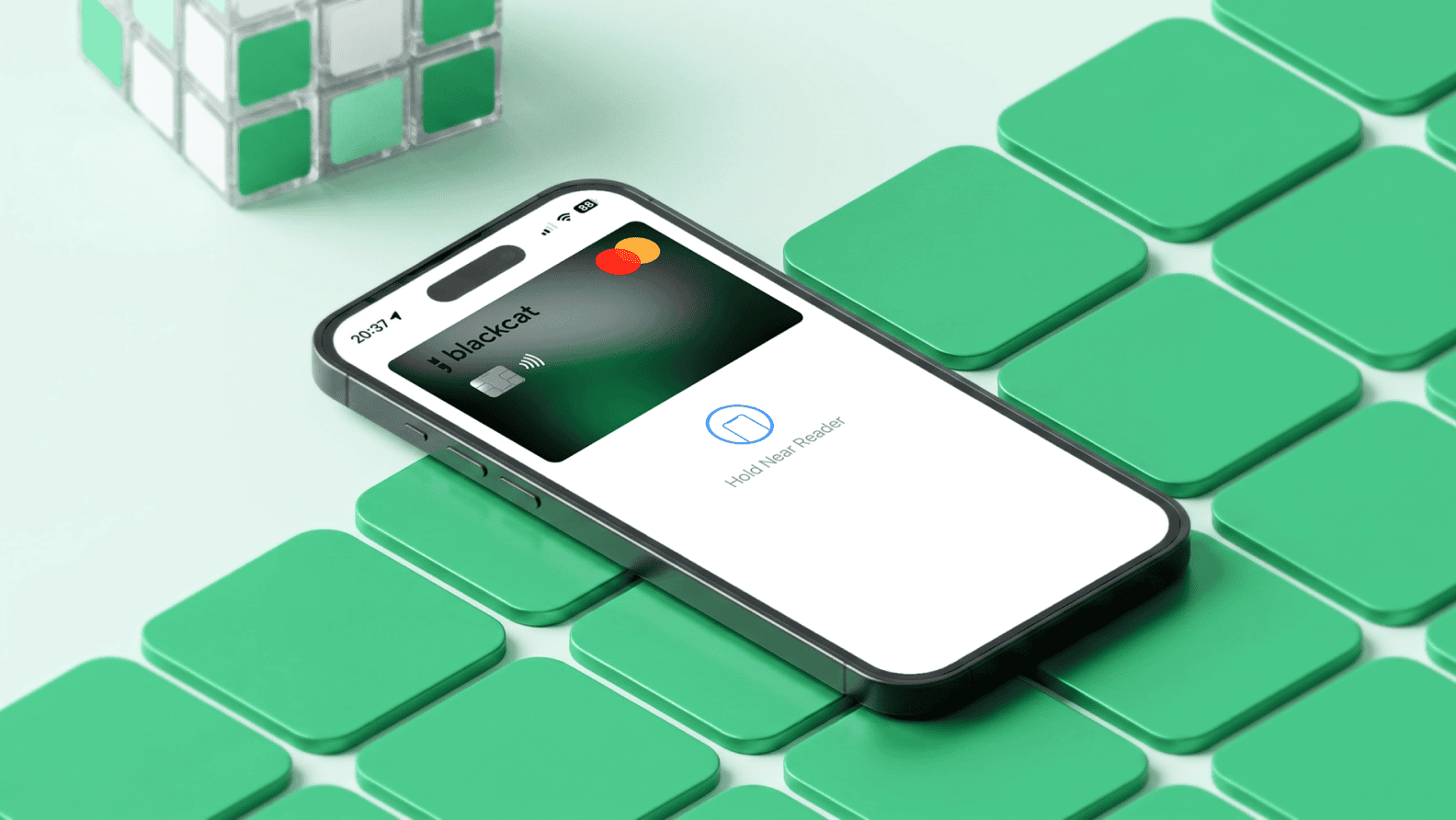
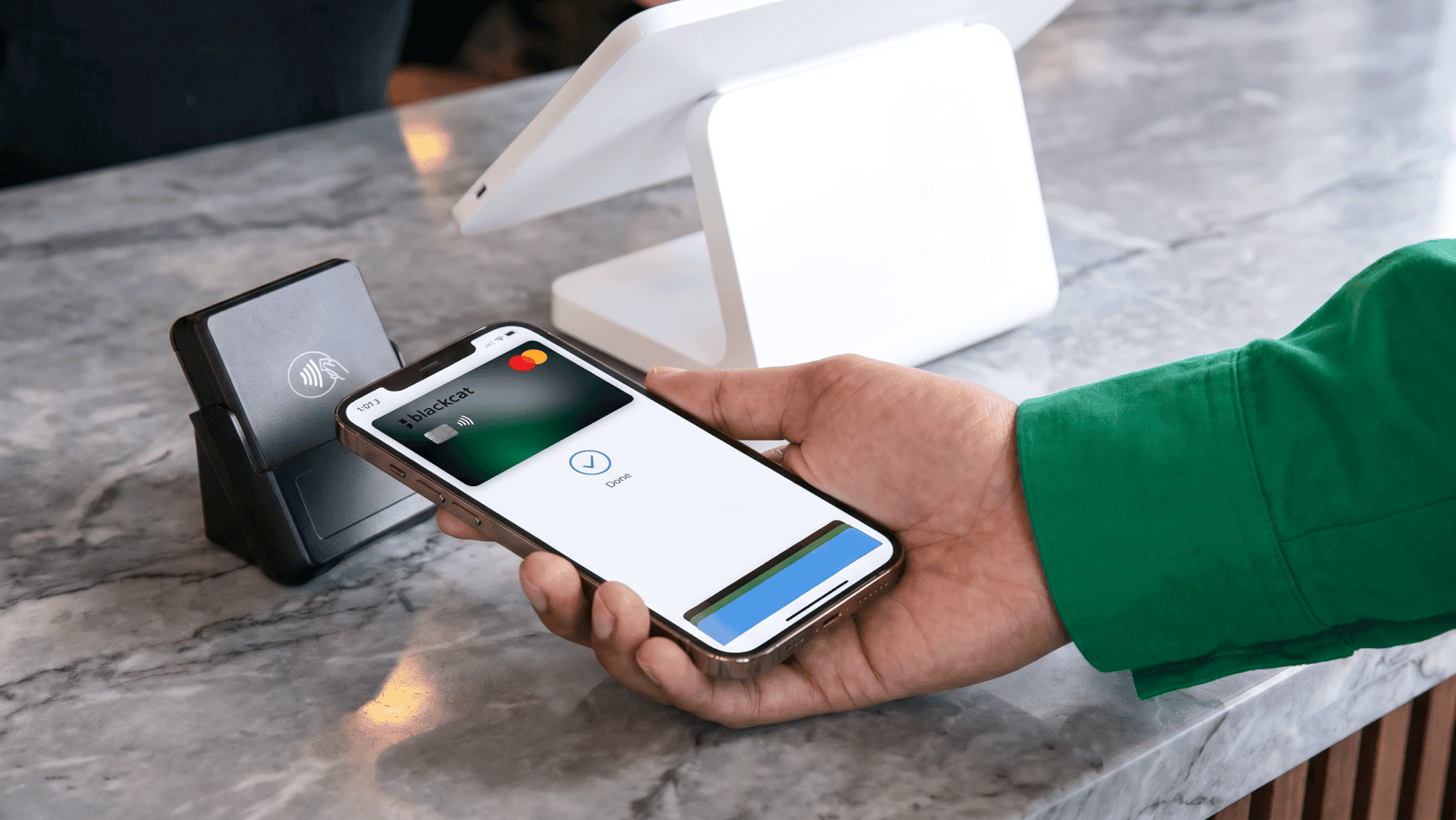
But here's the part many people miss: a virtual card isn't limited to online use. Once you add it to Apple Pay or Google Pay, it works for contactless payments at any NFC-enabled terminal. The terminal receives a tokenised payment credential — it can't tell whether the underlying card is physical or digital. So a virtual card in your phone wallet behaves identically to a plastic card at the checkout.
The key advantage is instant issuance. No postal delivery. No activation call. You open an account, complete verification, and your virtual card is ready in minutes. With Blackcat, you can start spending — both online and via mobile wallet in stores — the same day you sign up.
According to Mordor Intelligence's 2026 report, remote payments accounted for 73.64% of all virtual card transactions in 2025, while POS (in-store) payments are the fastest-growing segment at 21.22% CAGR — a sign that virtual cards are rapidly moving beyond their online-only origins.
What Is a Plastic Card?
A plastic card — also called a physical payment card — is the traditional format: a card you can hold in your hand, insert into a terminal, tap against an NFC reader, or use at an ATM. It carries the same credentials as a virtual card (number, expiry, security code) but in a tangible form.
Plastic cards have been the backbone of card payments for decades, and they're still essential in several situations where digital alternatives fall short. As a plastic card for everyday payments, the physical format remains the most universally accepted non-cash method across Europe. The ECB's SPACE 2024 study found that while cash use at point of sale dropped to 52% of transactions, physical card payments (via chip-and-PIN and contactless tap) remain the dominant non-cash method in-store. Digital wallets are growing — rising from 4% to 7% of POS transaction value between 2022 and 2024 — but a physical card is still by far the most universally accepted non-cash payment tool in Europe.
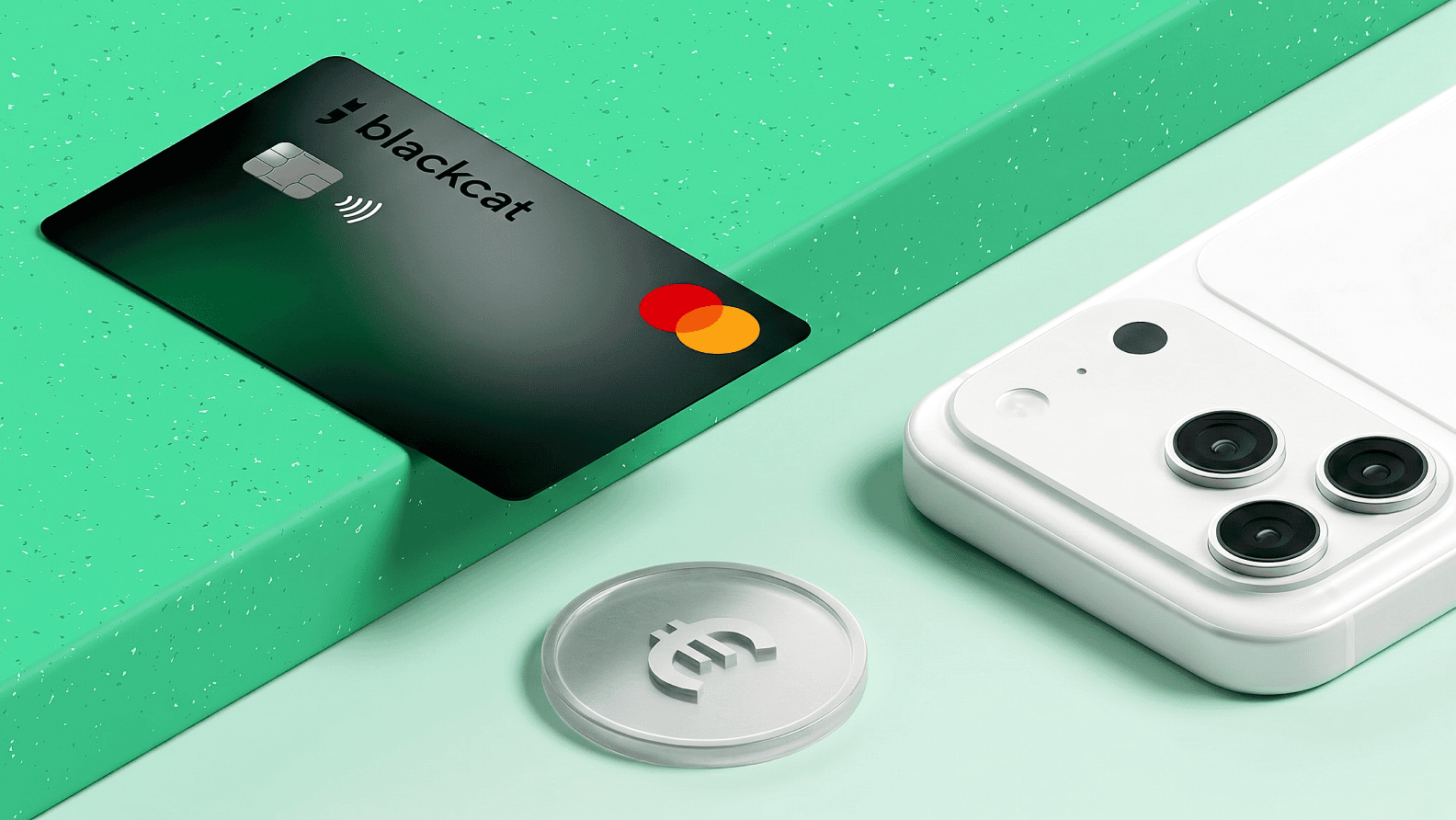
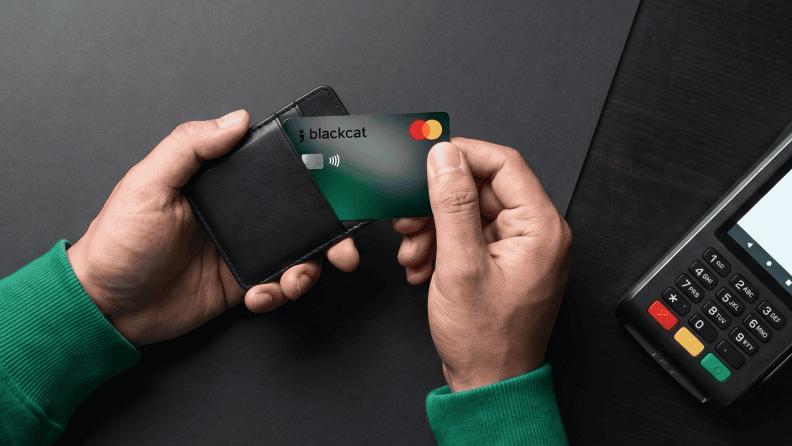
With Blackcat, the plastic card is free to issue with free standard worldwide delivery and comes with a €0/month subscription fee. It carries a credit-grade BIN — meaning it's accepted at hotels and car rental desks where standard debit cards are declined — while carrying no credit products or overdraft.
Where a Plastic Card Is More Useful
There are clear situations where a virtual card simply can't replace the physical version.
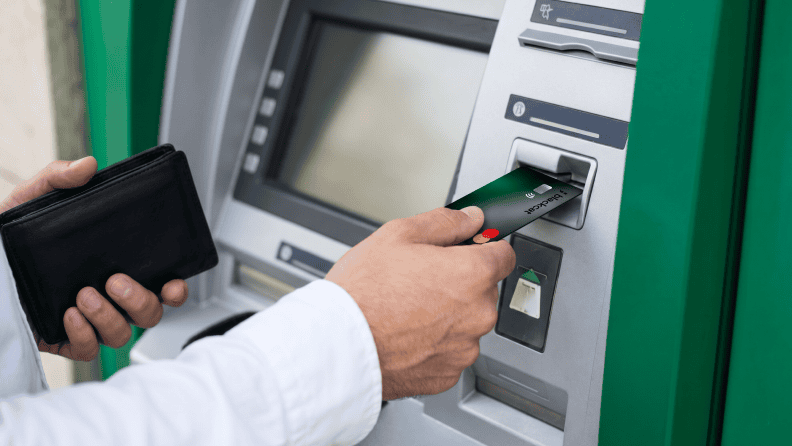
ATM cash withdrawals. If you need cash — and across much of Europe you still will, especially in Germany, Austria, and parts of southern and eastern Europe — you need a physical card. The ECB's 2024 data confirms that cash was used for 52% of POS transactions in the euro area by number and 39% by value. ATMs don't accept NFC from phones (with rare pilot exceptions). With a Blackcat plastic card, you can withdraw up to €5,000 per day and €10,000 per month, with the first €200/month free within the EU.
Terminals without NFC. The ECB's H1 2025 payments statistics report that 93% of POS terminals in the euro area support contactless — meaning 7% still don't. In rural areas, smaller merchants, and some public transport systems, chip-and-PIN insertion remains the only option. Your phone won't help here.
Hotels and car rentals. Many hotels and car rental companies require a physical card at check-in — sometimes insisting on seeing and even photocopying it. The merchant needs to place a pre-authorisation hold (often €200–€500), and their terminal may be configured to accept only cards with a credit BIN. A plastic card with a credit-grade BIN, like Blackcat's payment card, handles these scenarios without needing a traditional credit card.
Battery-dead backup. Phones die. Apps crash. Mobile wallets sometimes fail at the worst moment. A plastic card in your wallet is analogue, resilient, and doesn't need charging. It's the simplest possible fallback for a digital-first setup.
The feel of it. This one's harder to quantify, but it's real. In a world where everything is virtual — your ticket, your boarding pass, your loyalty card, your keys — there's something genuinely satisfying about pulling a well-designed physical card from your wallet and tapping it against a terminal. The weight. The click. The small, tangible ritual of paying for something with an object you can actually hold. It sounds trivial, but it's one of the reasons plastic cards aren't going anywhere. A phone screen doesn't carry the same sense of intention. A card does.

Is a Virtual Card Better for Online Purchases?
Yes — and the advantages go well beyond convenience.
Speed. A virtual card is available the moment your account is set up. Need to make an online purchase today? Your virtual card is ready immediately, with no waiting for delivery. Using a virtual card for online payments means you can act the moment you need to.
Subscription control. Dedicate a specific virtual card to a specific subscription service. Want to cancel? Deactivate the card. No customer support chase. No forgotten trials converting to paid plans. This is one of the most practical uses of a virtual online payment card.
Risk isolation. Shopping on an unfamiliar website? Use a virtual card linked to a wallet with a limited balance. If the merchant is compromised, your exposure is capped at that wallet's funds. Your main account stays untouched. This virtual card security advantage over plastic is significant — a compromised physical card exposes your entire account.
Multi-wallet budgeting. This is where the virtual card vs physical card comparison tilts decisively. If your payment provider supports multiple wallets, you can issue a separate virtual card for each one. One card for everyday payments — groceries. One for entertainment subscriptions. One for travel. Each draws from its own pool of money.
Do Virtual Cards Work with Apple Pay and Google Pay?
Yes — and this is what makes them genuinely powerful for everyday in-store use.
When you add a virtual card to Apple Pay or Google Pay, it's tokenised: the card network creates a device-specific token linked to your card credentials. When you tap your phone at a terminal, the token — not your actual card number — is transmitted. This is the same process that happens with a plastic card added to a mobile wallet.
The result: a virtual card in Apple Pay or Google Pay is functionally identical to a plastic card for contactless payments. The terminal can't distinguish between them. And because mobile wallets use biometric authentication (Face ID, fingerprint), many issuers allow higher transaction limits than for physical card taps — often exceeding the standard €50 contactless cap in the eurozone.
With Blackcat, you can add your virtual card to Apple Pay directly from the app. Google Pay works the same way. This means you can go from account opening to tapping your phone at a coffee shop in under an hour — without waiting for a plastic card to arrive.
Virtual Card vs Plastic Card: Side-by-Side Comparison
horizontal scroll
| Scenario | Virtual Card | Plastic Card |
|---|---|---|
| Online shopping | Ideal — instant, secure, isolatable per wallet | Works, but requires manual entry |
| Contactless in-store (via Apple Pay / Google Pay) | Yes — tokenised, often higher limits | Yes — native NFC tap |
| ATM cash withdrawals | Not possible | Required |
| Car rental / hotel check-in | Often not accepted physically | Required (credit-grade BIN best) |
| Subscription management | Excellent — deactivate per service | Harder to isolate individual subscriptions |
| Budget separation via multi-wallet | Perfect — separate card per wallet | One card, one source |
| Backup when phone dies | Not available | Always works |
| Instant availability | Yes — issued in minutes | No — delivery takes days |
Should I Use Both a Virtual and a Plastic Card?
Yes — and this is the setup that gives you the most control with the least friction.
Your plastic card lives in your wallet as the universal fallback. ATMs, chip-and-PIN-only terminals, hotel front desks, car rental agencies, dead-phone emergencies. You pull it out when the digital world doesn't cooperate. With Blackcat, the plastic card is free to issue and free to maintain — so there's no cost to keeping it available.
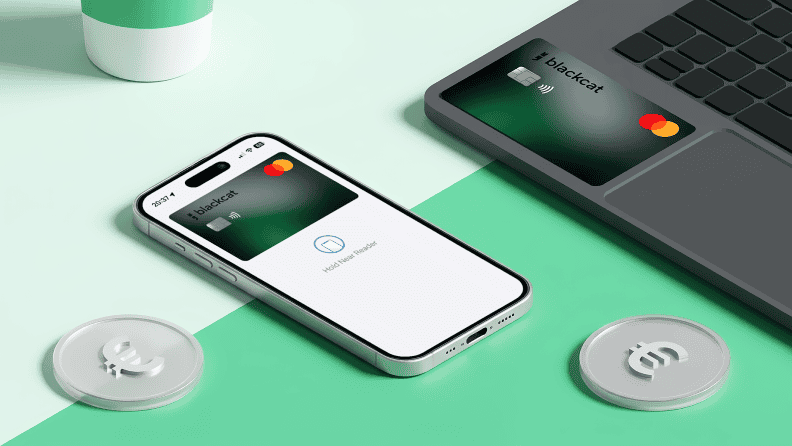
Your virtual cards handle everything digital. Online purchases, subscription services, in-app payments. With Blackcat's multi-wallet system, you assign each wallet a purpose — groceries, entertainment, travel fund, savings — and each gets its own virtual card drawing from its own balance. Meanwhile, your primary virtual card lives in Apple Pay or Google Pay for contactless payments in stores.
The result: your physical card rarely comes out of your wallet, but it's always there. Your digital setup handles 90% of daily financial life with more speed, more control, and better visibility. Every transaction is tagged to a specific wallet. Every wallet runs its own bonus. And if something goes wrong with one card or one wallet, the rest of your finances are unaffected.
If you're also working across currencies — say, receiving euros via SEPA but occasionally dealing in crypto — Blackcat's fiat wallet and crypto wallet with card functionality let you manage both in the same app. Convert between them when it suits you, spend from whichever wallet makes sense, and keep everything visible in one place.
Summary
Virtual cards and plastic cards aren't competing — they're complementary tools built for different situations. A virtual payment card gives you speed, isolation, multi-wallet budgeting, and seamless mobile wallet integration for online and in-store contactless payments. A physical payment card gives you universal acceptance, ATM access, and a reliable offline backup.
The smartest setup: use both. Get a payment card from Blackcat — free to issue, free to maintain, with a credit-grade BIN for hotels and car rentals — alongside unlimited virtual cards tied to your multi-wallet system. Use your phone for 90% of daily payments. Carry the plastic for the 10% where nothing else will do.
FAQ: Virtual Card vs Plastic Card
What is a virtual card?
A virtual card is a payment card that exists only digitally — as a card number, expiry date, and security code displayed in your payment card app. It can be used for online purchases, in-app payments, and phone orders. When added to Apple Pay or Google Pay, it also works for contactless payments at physical NFC terminals, making it usable both online and in stores.
What is a plastic card?
A plastic card is a physical payment card you can hold, insert into chip-and-PIN terminals, tap for contactless payments, and use at ATMs for cash withdrawals. It carries the same credentials as a virtual card but in a tangible form that works independently of your phone or any app.
What is the difference between a virtual card and a plastic card?
The core difference is form factor. A virtual card exists only digitally and is issued instantly; a plastic card is a physical object that requires delivery. Virtual cards excel at online payments, subscription management, and multi-wallet budgeting. Plastic cards are necessary for ATM withdrawals, chip-and-PIN terminals without NFC, and merchants that require a physical card (like hotels and car rental agencies).
Can I use a virtual card in stores?
Yes — by adding it to Apple Pay or Google Pay. Once in a mobile wallet, a virtual card works at any NFC-enabled terminal via contactless tap, just like a physical card. The terminal cannot distinguish between a virtual and a plastic card. In the euro area, 93% of POS terminals now accept contactless.
Is a virtual card better for online purchases?
Generally yes. Is a virtual card safer for online shopping than a plastic one? In most cases, yes — a virtual card is available instantly (no delivery wait), can be isolated to a specific wallet with a limited balance (reducing fraud exposure), and can be dedicated to individual subscriptions for easy management. Can I use a plastic card online? Of course — it works fine, but if you shop online frequently, a virtual card tied to a dedicated wallet gives you more control and security than using a single physical card for everything.
When is a plastic card more useful?
A plastic card is essential for ATM cash withdrawals, chip-and-PIN terminals that don't support NFC, and at hotels or car rental desks that require a physical card for pre-authorisation holds. It's also an important backup when your phone battery dies or a mobile wallet malfunctions.
Do virtual cards work with Apple Pay and Google Pay?
Yes. When you add a virtual card to Apple Pay or Google Pay, the card network creates a device-specific token. You tap your phone at any NFC terminal and the payment processes exactly as it would with a physical card. Many issuers allow higher transaction limits for mobile wallet payments because of the built-in biometric authentication.
Which card is better for everyday payments?
It depends on how you pay. In the virtual card vs physical card comparison, a virtual card added to your mobile wallet handles most daily purchases — contactless taps, online shopping, subscriptions — with more flexibility and control. A plastic card is better for ATM withdrawals, chip-and-PIN terminals, and situations where a physical card is required. For most people in Europe, a combination of both provides the best everyday coverage.
Should I use both a virtual and a plastic card?
Yes — do I need both virtual and plastic cards? For the most complete coverage, absolutely. Use virtual cards for online purchases, subscriptions, and budgeted spending across multiple wallets. Use your plastic card for ATMs, chip-and-PIN-only situations, hotels, car rentals, and as a battery-proof backup. Together, they cover every payment scenario with maximum control and minimum friction.