


Table of Content
Table of Content
Start with the event behind the moneyOne payment is not your whole financial storyI already passed verification. Why am I being asked again?What usually brings the question up?Five common situations and the records that may helpHow to reply without making the review harderWhat is happening while you wait?What about the personal information in those records?Replies that usually slow the reviewSummary
Table of Content
A source of funds check can feel accusatory. In most cases, however, the question is practical: what event produced this payment, and does the explanation fit how the payment account is used?
This guide first explains the difference between one payment and your wider financial history, and why current EU work matters. It then looks at why an app may ask questions after sign-up, what tends to trigger a review, which records help and how to reply. It also covers what happens while you wait, how your personal information should be handled, mistakes that lead to more questions and the points customers raise most often.
Why this matters now: AMLA's consultation on customer due diligence closed on 8 May 2026, while its separate consultation on ongoing monitoring runs until 3 September 2026. The EU Anti-Money Laundering Regulation is due to apply from 10 July 2027. The practical direction is towards more consistent, risk-based checks, not the same checklist for every customer.
Start with the event behind the money
In simple terms, the source is the event that created the money. The sending bank or app is only the route.
Imagine €12,000 arrives from a lawyer after you sell a car. The lawyer’s account is the route; the car sale is the source. Salary, freelance work and inheritance follow the same logic.
The reviewer is joining the dots: what happened, who paid, how much, and how the money reached you. The explanation and records should tell the same story.
One payment is not your whole financial story
Source of wealth is the bigger picture: how someone built their finances over time through work, a business, investments or inheritance. A source-of-funds enquiry, by contrast, is about one particular amount.
A business owner may build wealth over 20 years but receive €15,000 today from a share sale. The business history explains the wider picture; the sale explains today’s transfer. A routine review may stop there, while a higher-risk case can lead to broader questions.
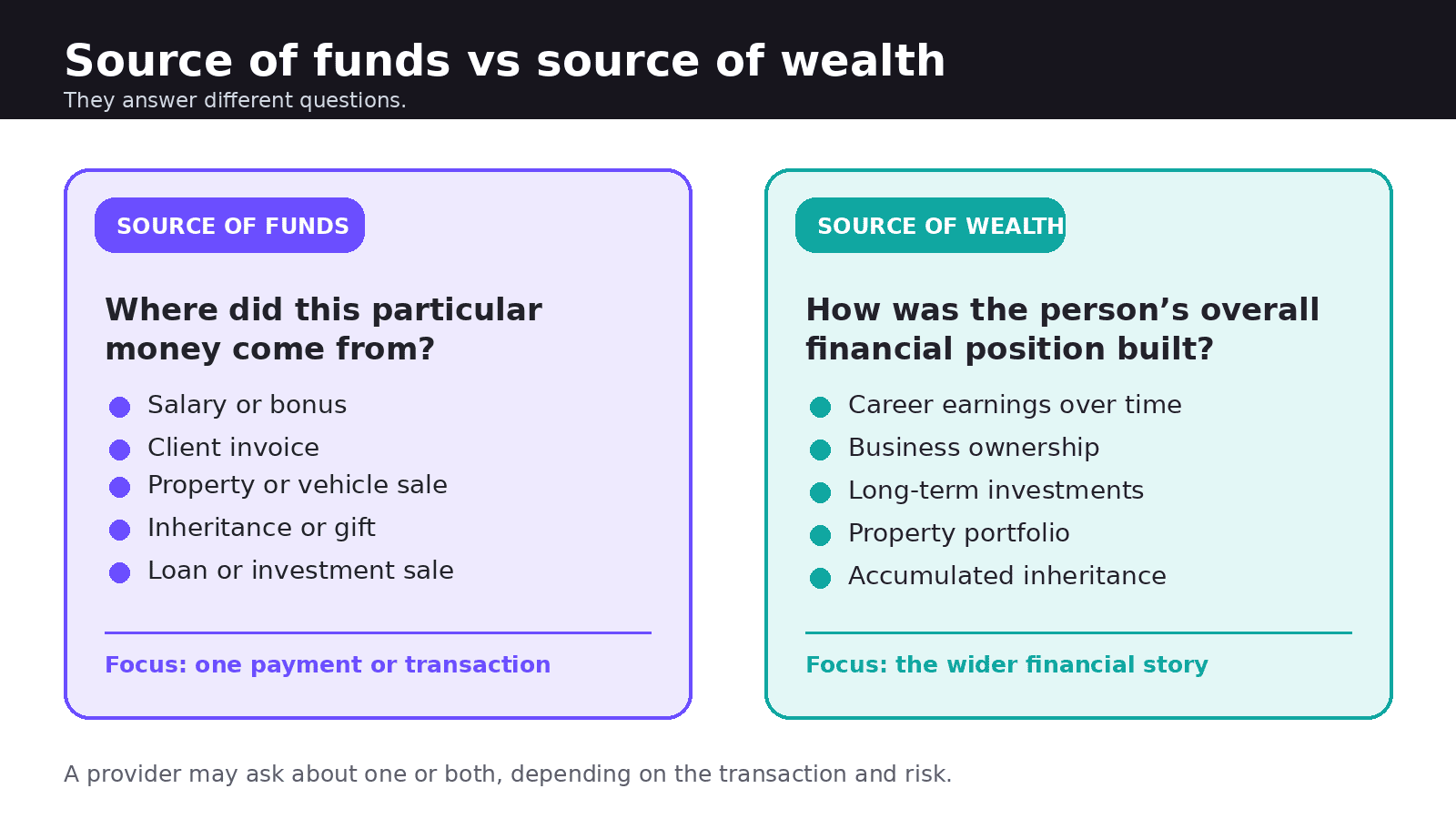
Figure 1. Source of funds explains a particular payment; the wider wealth picture explains how someone accumulated assets over time.
I already passed verification. Why am I being asked again?
Sign-up checks confirm who you are; they cannot predict every payment you will receive. A €2,500 monthly salary may fit the profile perfectly, yet say nothing about a later €20,000 car sale or new freelance client.
That is why transaction monitoring continues after sign-up. The app compares activity in the account with the pattern it expected. A flag raises a question; it is not a conclusion. Perfectly lawful money can stand out because the amount is unusual, the sender is new or the customer's circumstances have changed.
Banks are not the only providers with anti-money-laundering duties. Blackcat is issued by Papaya Ltd, an electronic money institution regulated in Malta. Its terms allow it to request source-of-funds information and pause a transaction while it checks; its data policy lists financial and AML information among the data it processes.
What usually brings the question up?
There is no single public amount that automatically triggers every review. Some rules set thresholds for particular checks, but context still matters. A €20,000 payment may be routine for a business account and surprising in a salary account, even if it arrives in several smaller transfers.
Often, it is one of these:
- A payment is much larger than usual.
- Several payments arrive from new or unrelated senders.
- A third party sends money but its connection to the customer is unclear.
- The stated job or business does not appear to explain the activity.
- Funds arrive from a country, sender or business sector outside the account’s usual pattern.
- Money is received and moved out again very quickly.
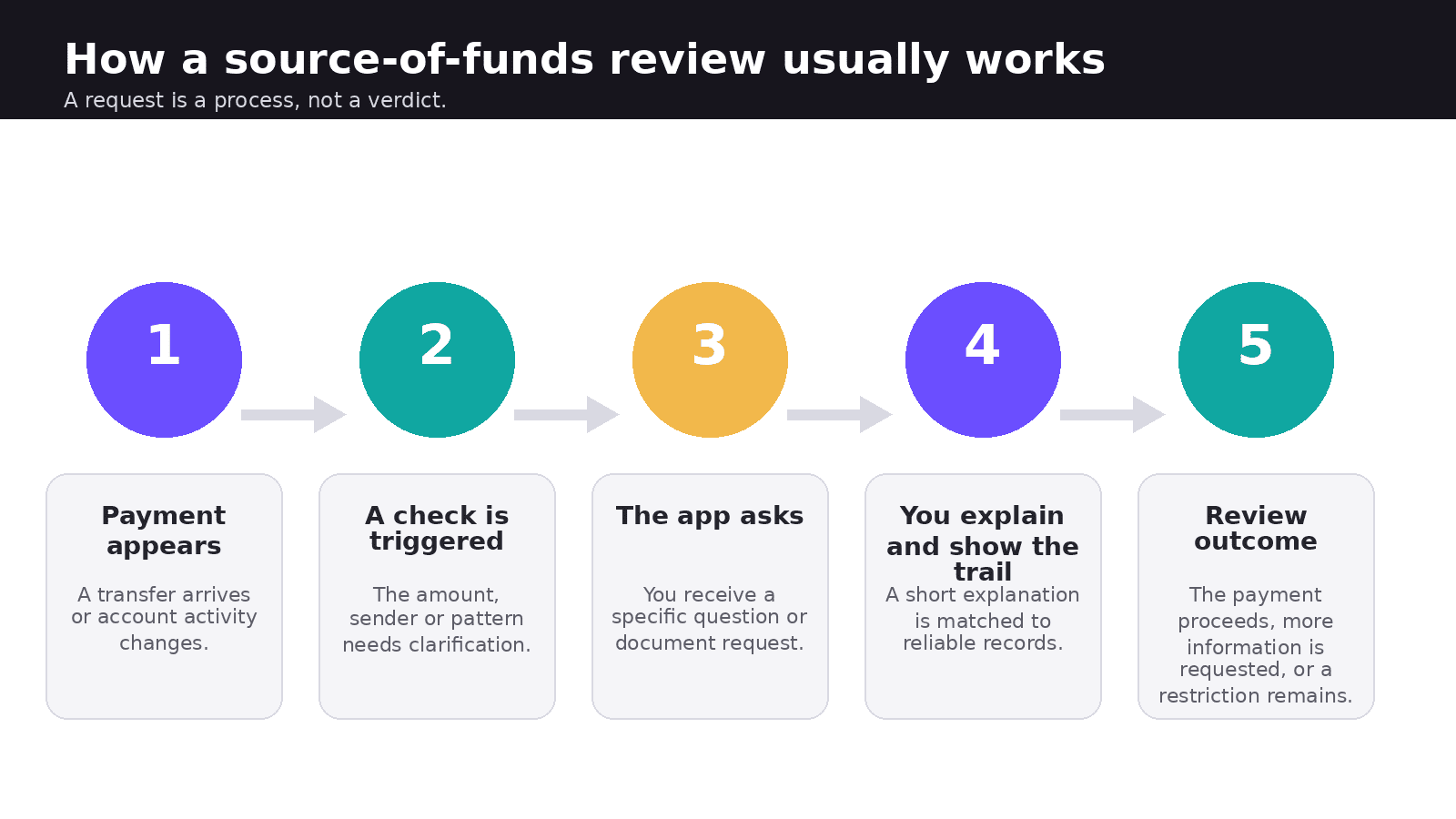
Figure 2. A review typically moves from a payment or profile change to a question, supporting records and a decision.
Five common situations and the records that may help
If an app asks for source of funds documents, it usually wants two links: a record showing why the money was due and a record showing that it arrived. For example, an invoice plus the matching bank entry gives better proof of source of funds than either record on its own.
1. Salary increase or bonus Imagine someone who is usually paid €2,500 receiving €7,500 in June. Without context, the app cannot tell whether the difference is a bonus, back pay or an error. A payslip plus a bonus letter, employer confirmation or statement may close that gap.
2. Freelance or business income Freelance income rarely arrives neatly each month. If three client payments land together, be specific: “Invoices 104 to 106 for design work completed from May to July.” The invoices or contract explain the work; the statement shows the money arriving.
3. Sale of an asset A property, vehicle or investment sale may be supported by a sale agreement, completion statement, broker statement, lawyer’s letter or account statement. If fees or taxes were deducted, explain why the amount received is lower than the sale price.
4. Inheritance or family gift An inheritance may require estate records, an executor’s letter and the payment trail. A gift may require a signed gift letter, evidence of the relationship and sometimes information showing how the donor obtained the money. The aim is to confirm that the transfer is genuine and traceable.
5. Loan or transfer between your own accounts For a loan, the agreement and payment record may help. For a transfer between your own accounts, statements can show that both belong to you, although the provider may still ask how the money originally entered the first account.
Quick document guide
horizontal scroll
| MONEY SOURCE | RECORDS THAT OFTEN HELP |
|---|---|
| Salary / bonus | Payslip, employer letter, account statement |
| Freelance / business | Invoice, contract, tax or business statement |
| Asset sale | Sale agreement, completion or broker statement |
| Inheritance / gift | Estate or gift records and payment trail |
| Loan / own accounts | Loan agreement or statements for both accounts |
How to reply without making the review harder
You do not need to sound like a lawyer. A useful reply answers three things: which payment, why it was made and what evidence supports it.
In practice, more documents do not always mean a quicker review. A short explanation that links the event, payer and payment trail is usually more useful than a large, unexplained bundle.
- Identify the payment. Start with the date, amount and sender.
- Explain it in ordinary language. Say who paid, why, and which period or event the payment covers.
- Show both halves of the story. Provide readable records showing why the money was due and that it arrived.
- Upload clear records securely. A genuine request for financial app verification should direct you to the provider's official upload channel. Keep names, dates and amounts readable, and do not send documents to an unverified email address or social-media account.
- Explain anything missing. If a record does not exist, say why and ask what reliable alternative is acceptable.
Example reply: “On 14 August 2026, I received €4,800 from ABC Design Ltd for invoices 104 to 106 covering design work completed from May to July. I have attached the contract, invoices and statement showing receipt.”
Keep a copy of your reply. Old KYC documents may confirm your identity, but they do not explain this new payment.
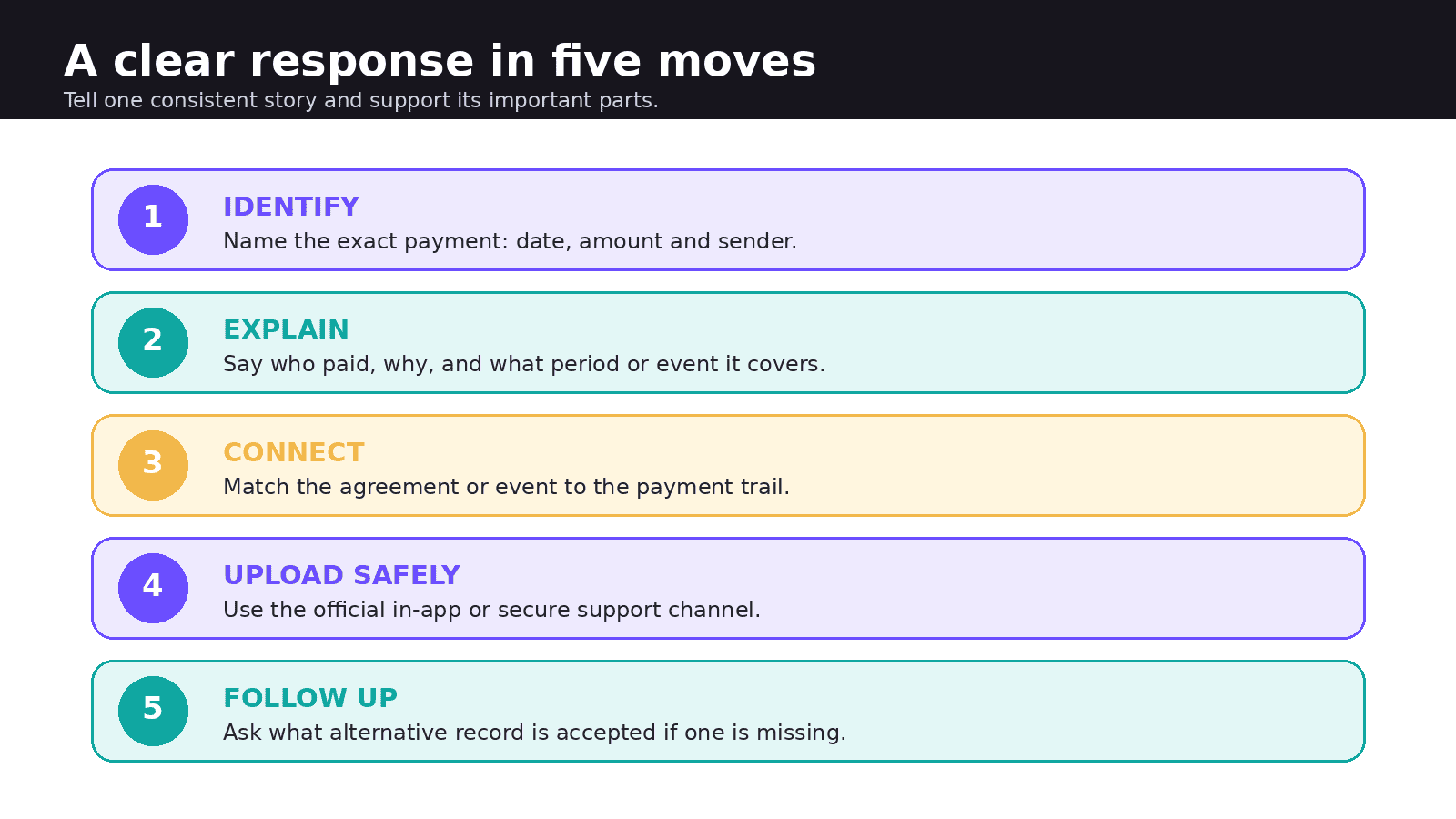
Figure 3. A short explanation, complete trail and secure upload usually reduce avoidable follow-up questions.
What is happening while you wait?
Behind the scenes, a reviewer is checking whether the explanation, account profile and payment trail fit together. Names, dates, amounts, sender and purpose should line up. The provider may accept the explanation, ask a follow-up question, delay or decline the transaction, or restrict the account where its terms and applicable law permit.
A financial app account review can be stressful, particularly when you need the money quickly. Do not try to work around it by splitting the payment, using someone else's account or changing your explanation; that usually creates more questions. Reply through the official channel and stick to the facts.
Sometimes support cannot tell you everything. AML rules can limit what an institution says if more detail could alert someone to a report or investigation. That can make an answer feel vague, even when the support team is following the law.
Related Blackcat guide: What Does a Pending Transaction Mean
What about the personal information in those records?
Compliance does not give a provider a blank cheque to collect every document it can think of. The request should relate to the payment, be reasonably limited and be handled securely. Separate record-keeping rules may mean the provider cannot delete the documents immediately.
Confirm that the request appears in an official channel. If a statement contains unrelated personal details, ask whether a limited extract or another record is acceptable before cropping or redacting it.
Use the support route shown inside the app or the official help centre. That is safer than replying to an address or account you have not verified. Blackcat Help Centre
Replies that usually slow the review
- Writing only “savings” or “family money” without explaining the background.
- Sending a statement that shows the payment but not the agreement or event behind it.
- Providing records with different names, dates or amounts and no explanation.
- Cropping or editing documents so heavily that they cannot be verified. One rule covers most of this: tell one consistent story and support the parts that matter.
Summary
The main point is simple: the app is usually trying to understand one payment, not your entire financial history.
Say who paid you, why, when and how much. Then send records that connect the underlying event with the payment. If one does not exist, explain why and ask what alternative the provider will accept.
Providers can make the process less frustrating too. They should identify the payment, ask only for relevant evidence and offer a secure way to reply. The clearer the request, the less likely everyone is to end up in another round of documents.
FAQ:
Does a request mean I am suspected of money laundering?
Not necessarily. A request can be a normal compliance step when a payment differs from the expected account activity. By itself, it is not a finding that anything unlawful happened.
Is there a fixed amount above which a check is required?
No universal public amount controls every case. Legal thresholds exist for some checks, but the sender, country, pattern, account history and purpose also matter. A smaller unusual payment may receive more attention than a larger payment that fits the account.
Can a financial app ask more than once?
Yes. Information becomes outdated and account activity changes. A provider may ask again when a new payment type appears, documents expire or the account is used differently from the original explanation.
How long does the review take?
There is no universal timeframe. A simple case with complete records may be resolved quickly; a complex payment involving several parties or missing documents can take longer.